NATIVE ANIMALS UNDER INTENSE FIRE: DO WE CARE?
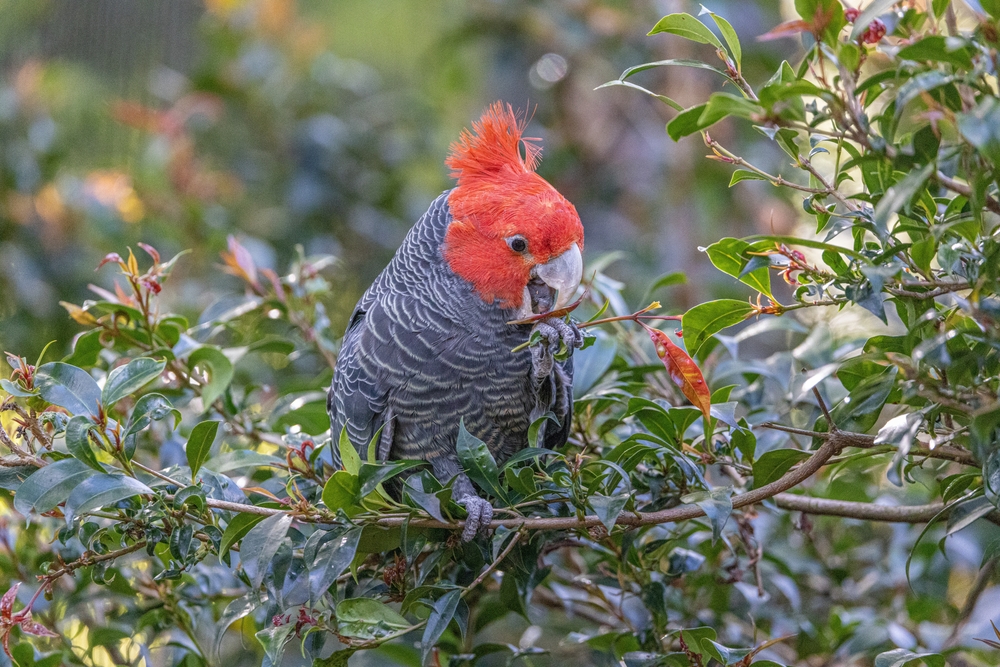
Gang Gang Cockatoos photo: Shutterstock Share this page NATIVE ANIMALS UNDER INTENSE FIRE: DO WE CARE? The belated release of the 2021 federal State of the Environment report offered a grim picture of the state of Australia’s native biodiversity – decline, loss and poor ecosystem management are the major findings, along with the current lack of factoring in impacts of climate change on ecosystems and habitats. The report found that the number of Australian threatened plant and animal species has increased by more than 200 between 2016 and 2021 to almost 2000 (1,918 in June 2021 up from 1,774 in 2016) with Gang-gang cockatoos and a northern hopping-mouse most recently joining this list of concern and shame. More than a third of Australia’s eucalypt woodlands have been extensively cleared, and worse figures are reported for some other major vegetation groups According to the state of environment report, “within 20 years, another seven Australian mammals and ten Australian birds – such as the King Island brown thornbill and the orange-bellied parrot – will be extinct unless management is greatly improved.” The report recommends that “Australia needs better and entirely new approaches to environmental management”. https://www.sydney.edu.au/news-opinion/news/2022/07/19/state-of-the-environment–the-findings.html Australia tops rate of mammalian extinctions With colonial/settler impacts on the natural environment in the past 230 years, Australia has the dubious distinction of owning the world’s highest rate of mammalian extinctions. This is not accidental or just due to the predations of imported cats and foxes on small native animals as we are often told. It is very much the outcome of both colonial and post-colonial practices, traditions and beliefs in a new nation dedicated to exporting ‘resources’ that include sentient animals badged as commodities. At stake now is not only the fate of endangered species but also that of so-called ‘common’ Australian species that are not yet on a threatened list. They are on the hidden front-line of a national tradition of persecuting, financially exploiting, and removing native wildlife that is inconvenient to business interests deemed vital to the economy, underpinned by the thinking of a colonial enterprise. Beliefs and traditions guiding wildlife management The beliefs and traditions of western colonialism can be called a religion in the sense of ‘beliefs to live by’. In parallel, the normative ethics and practices of wildlife ‘management’ stem from western European philosophical and agricultural traditions, not least a nation-building commitment to private property and extensive land-owner rights. Resident wildlife and the immediate natural environment are treated as owned property with no rights. The British also embedded an empire-building biological science tradition dedicated to developing the colonies – with imports like wool sheep – as back paddocks to the motherland. In Australia as a result, applied ecology and related wildlife management priorities have kept strong links to the interests and beliefs of sheep farmers and other agricultural and economic enterprises considered important to the new nation of Australia. Christian beliefs came with the new nation. Contemporary wildlife management in Australia (and New Zealand), with a frequent pivot to lethal tools, may seem unremarkable to those who accept Christian teachings revolve around ‘dominion’ or domination by humans over nature and other species – in contrast to the emerging and attractive Christian view of humans playing a stewardship role to the natural world and its fauna and flora. Stewardship is closer to the worldview of Australia’s First Nations. Indigenous knowledge views ‘Country’ – the Australian land and everything on it, sentient and not – as interconnected and with mutual responsibilities. For those schooled in the western tradition, it’s akin to the biological concept of the natural web-of-life that underpins societal existence. In their new book ‘Songlines, first knowledges’ Margo Neale and Lynne Kelly write: [The] knowledge carried in the Songlines [also known as Dreaming tracks] decrees that humans are equal with all things animate and inanimate. Together we form part of a web, in which each component sustains the land…. Every single thing has a place and a kinship with humans.”The dramatic loss of Australian biodiversity is linked to the background of beliefs and values that came with colonial settlement and a history of dispossession and disrespect for the unique continent and its fauna and flora (paralleling the dispossession of the indigenous people themselves) on behalf of a wholesale landscape makeover to European ideals and profit-making developments. Native animals became badged as pest or product, or recreational killing targets. This hidden history and its blood -soaked contemporary legacy forms the subject of my recent book ‘Injustice- hidden in plain sight the war on Australian nature’…. followed by some positive contemporary stories of rewarding co-existence with the nature of Australia. My research sought understanding of the extraordinary hold that political/economic narratives maintain over Australians – as demonstrated by the national silence in the face of brutal contemporary management of some still ’common’ native species of mammals and birds. Wildlife management still a killing culture Dingos, emus, wombats, kangaroos and wallabies, possums, eagles, various seed-eating cockatoos and other bird species all face lethal ‘management’ by gun or poison from state governments and private landholders. These animals have been demonised as ‘pests’ since settlement and are still removed, charged with ‘competing’ with domestic stock for grass or other vegetation like saltbush, or they are accused of damaging crops and fences or of being unacceptable predators. Ducks and other waterbirds annually face the guns of ‘recreational’ hunters in some states. More than 60 species of macropod (that is the kangaroo species big and small, thus named because of unique big feet) inhabited Australia at the time of European settlement in 1788. Roughly one quarter of that pre-settlement number is now classified as nationally or regionally extinct or suffering greatly reduced numbers. See Injustice p123 World’s biggest on-land wildlife slaughter. What do we know? The fate today of the remaining large kangaroos– Red, Eastern and Western Greys, and Wallaroo or Euro – is to be victims of an industrial-scale wildlife trade largely hidden from the public. The ruthless practice of removing native grazers has
