Terri Irwin and Others Tell Stories Of Co-Existing With All Wildlife, Nature
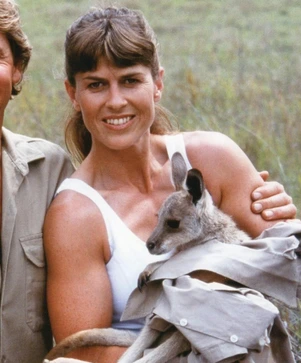
Terri Irwin Source: Instagram Share this page Terri Irwin And Others Tell Stories of co-existing with All Wildlife, Nature Co-existence and respect for our fellow species, sharing the land and food, is a pathway of hope and learning to restore our natural home – now degraded and increasingly dangerous – while we hope to lose lethal ‘management’ of native species. Win-win co-existence with Australian wildlife In my recent book exposing the colonial destruction of the native Australian landscape and its wildlife: ‘Injustice – hidden in plain sight the war on Australia nature….’ I shone a light on the lack of care and understanding for native species that has allowed lethal wildlife management, read extensive killing, to continue as a ‘normal’ way of behaving. Australians still look away from the world’s largest contemporary land-based wildlife slaughter – the annual massacre of hundreds of thousands of kangaroos of various species shot for meat and leather trades, or shot just to remove them as happens every year in the nation’s so-called bush capital. As well as kangaroo species, dingos, wombats, possums, bats, birds, marine wildlife, all remain ‘managed’ by gun, poison and net. And that’s just in the vertebrate animal kingdom. Human impact on native vegetation and on the insect world integral to maintaining ecosystems has been immense and worrying. As balance to this tale of woe, for the concluding Sharing chapter of Injustice I talked with some trail-blazing Australians who have taken the path of beneficial (for all) co-existence and sharing the land with wildlife on their farm production properties. Following is an excerpt from the book: a chat with Terri Irwin who, with her late husband Steve, has done much to encourage respect and compassion for Australian native wildlife. The chapter in Injustice also reports the experience of Charles Massie, author of ‘Call of the Reed Warbler’ and his exploration of regenerative farming methods that heal the land from post-colonial destructive practices while bringing in good farm income. His book includes many case studies. More from Charlie below. https://mariataylor.com.au/ Visit with Terri Irwin Source: Instagram Terri Irwin, along with her late husband Steve, did much to popularise and say it’s okay to love Australian wildlife – notably the slithery and snappy variety. Terri is still doing this work. In recent years she spent much of her time filming segments for a television program called Crikey! It’s the Irwins, along with her children Bindi and Robert, while working alongside some 500 staff at the family-owned Australia Zoo. The zoo now houses more than 1,200 animals on about 1,000 acres of Sunshine Coast bushland. Terri wanted to talk about the still unresolved and unequal relationship between humans on production properties and the common wildlife, particularly kangaroos. We talk about her family’s conservation grazing properties in central Queensland and in the Queensland gulf country. Both properties are living experiments, in that they allow the natural wildlife – from dingo to emu to kangaroo – to live peacefully. In central Queensland, between St George and Roma, neighbours may still be shooting kangaroos, poisoning dingos, or fencing emus from their path to food and water, but not on Mourachan. Steve and Terri allowed the property to revegetate naturally after they acquired it in the early 2000s. An unsuccessful attempt at establishing young river red gums indicated that regrowth was the easiest path. It proved too difficult to keep the water up to planted trees during drought. The plan has been to increase the diversity of plant life and extend ecosystems. Mourachan lies in the brigalow (acacia woodland) belt – a landscape that has suffered extensive clearing. The family is now managing118,000 acres (47,753 hectares) plus a neighbouring block. The properties continue to commercially run cattle. Steve and Terri also started to engage the neighbours to document the presence of the rare Woma python. That worked out wonderfully, but what was disheartening was how much kangaroo shooting was going on. That’s when they learned about Australia’s industrial-scale kangaroo meat and skin industry, and how extremely poorly regulated it is. “I’ve seen really sad things with kangaroos,” she tells me. “Nobody is following these people around to see how they are killing the animals. There is also a sense if you are a landowner that you can treat wildlife in any way that you see fit without requesting permission or a permit.” Rebalance to nature with wildlife-friendly fencing, trees, longer grass Rebalancing the property with nature required removing some of the property’s features, and expanding others. For wildlife, that included removing kilometres of old fencing, or modifying it to wildlife-friendly fencing – a project that Steve Irwin started and convinced the neighbours would be okay. Wombat in Southern NSW —- Maria Taylor photo Wildlife-friendly fencing ensures bats, possums and gliders or birds no longer getting caught on the top strand. And the bottom strand is not hurting animals ducking under the fence, as wombats must do to get across the countryside and kangaroos also prefer ducking under. Terri says opening the country from bad fencing has worked for two decades on their properties and she’s really keen on changes like that. Regeneration of trees and shrubs was a key factor for good ground cover, and went hand in hand with habitat restoration. It also helped move on the kangaroo shooters. That was when the vegetation reached a point that the shooters could no longer see the kangaroos as they would on a cleared paddock. Terri still sees the effects of cleared paddocks and set stocking in the neighbourhood: “This attracts kangaroos, because essentially you are building a golf course with constant new grass. ‘Wow, we’ll come to your house!’ “On our property, we have different vegetation areas, some grassed areas, some treed areas. Less of a monoculture still allows good beef yields while inviting less roos,” while creating other biodiverse habitat. Live and let live co-existence with good income Kirra the dingo. Jennifer Parkhurst photo The property has a complete live-and-let-live policy for native animals, while also
